


Gustav's Journal
Gustav's Journal
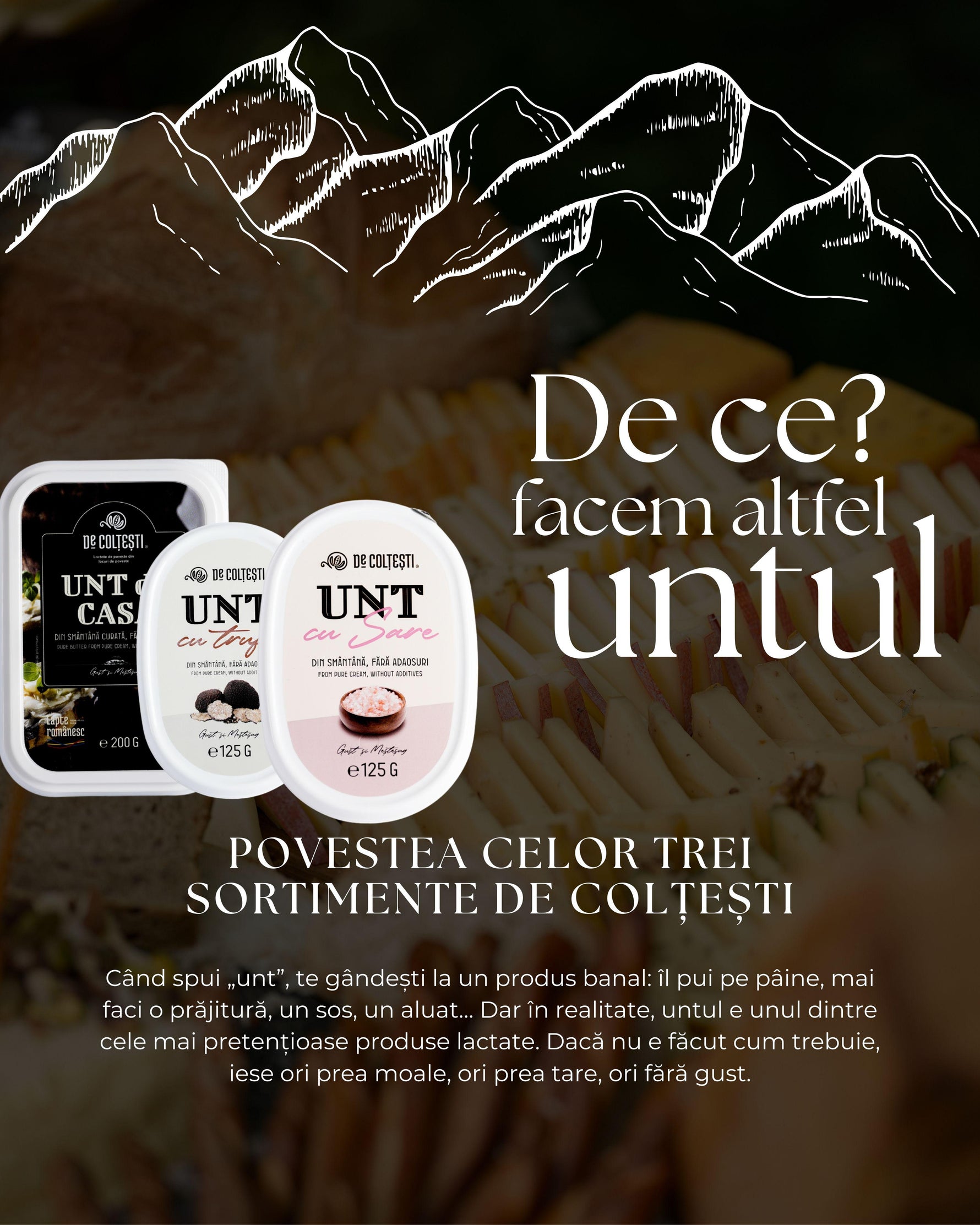
Why do we make butter differently? The story of the three De Colțești varieties
When you say "butter," you think of a mundane product: you put it on bread, maybe make a cake, a sauce, some dough… But in reality, butter is one of the most demanding dairy products. If it’s not made properly, it turns out either too soft, too hard, or flavorless.
That's where De Colțești comes in. We’ve learned that good butter is no accident; it’s a combination of clean milk, craftsmanship, and a bit of Transylvanian stubbornness not to compromise on quality.
What makes it different from "ordinary butter"
On the shelf, all packs of butter look the same. The difference is only revealed in the kitchen.
Ordinary butter can "break" in a sauce or leave your cake lacking consistency.
De Colțești butter has a constant 83% fat content, a uniform texture, and a stable melting point.
This means it whips correctly into a cream, binds properly in a sauce, and gives dough elasticity without any surprises.
In short: it is the butter that lets you do your job with peace of mind, whether you are at home or a chef in a professional kitchen.
The three varieties that define us
Homemade butter with 83% fat – our classic: rich, clean, consistent. Just as our grandparents knew it.
Salted butter – simple, but with that extra flavor that makes a difference at the table.
Truffle butter – for those moments when you want something special. A distinct taste, from simple ingredients brought together.
Conclusion: why we make butter differently
We didn't set out to reinvent butter. We set out to make it well, consistently, and honestly. And that shows in every batch, in every dish, and in every pack that reaches your table.
De Colțești means reliable taste for the home and trust for chefs.
De Colțești butters – crafted with skill, tested in kitchens.
You are what you eat.
order directly to your home with fast delivery within 48h.

Gustav's Journal
Why did we change our motto at De Colțești? The story behind “As you eat, so you live”
At De Colțești, we didn't choose a new motto because the old one no longer worked, but becausewe wanted to say, in a few words, what we truly do.

Gustav's Journal
Cheese and wine: how to pair them to enhance their flavors? (II)
Pairing cheese with wine is not a new custom. Since ancient times, people have observed that cheese acquires a different flavor depending on the type of wine it is consumed with. Thus, they began to create rules for pairing the two foods, rules that are preserved to this day.
We have started to document these rules and have gathered them into a Cheese and Wine Pairing Guide, which we continue to update with new, equally delightful combinations. Discover them yourself!
Camembert Cheese
Camembert is a French-origin cheese, creamy, with a soft or semi-firm texture and a sweetish taste. It can be found in different shades of color, from white to cream, depending on its maturation period. On the outside, this type of cheese is covered with a layer of edible white mold (which can be eaten).
Camembert pairs very well with a full-bodied, strong, and slightly oily wine, which is at the same time discreet enough not to overpower its sweetish aroma. The suitable wines for this type of creamy mold-ripened cheese are:
Pinot Blanc
Pinot Noir
Pinot Gris
Cabernet Sauvignon
Cabernet Franc
Merlot
Beaujolais
Chardonnay
Chenin Blanc
Gewurztraminer
Aged cheeses pair very well with white wines
Gouda Cheese
Gouda is a hard cheese of Dutch origin. It has a cream color and is covered with a layer of paraffin wax, often yellow. It can be consumed both fresh and aged, and the best varieties of Gouda are the aged ones. For example, Old Gouda aged for 2-3 years is distinguished by a strong taste, slightly similar to butter, and a dark yellow color.
To intensify the flavors of Gouda cheese, you need a dry, tannic wine. The suitable varieties for this type of hard cheese are:
Cabernet Sauvignon
Chardonnay
Merlot
Pinot Gris
Riesling
Shiraz/Syrah
Zinfandel
Goat Cheese
Goat cheese is one of the most well-known and consumed types of cheese in the world. When fresh, it has a white color, a crumbly texture, and a slightly sweet taste. When aged, it acquires an off-white or yellowish-white color, a semi-soft and slightly "sticky" texture, and a strong, salty, and slightly spicy taste.
The strong and slightly piquant aroma of aged goat cheese can be "tempered" with a cool, aromatic, and slightly acidic wine. The suitable wines for this type of cheese are:
Sauvignon Blanc
Beaujolais
Cabernet Franc
Chardonnay
Chenin Blanc
Pinot Gris
Sauvignon Blanc
Zinfandel
Arrange a platter of Torockoi aged cheeses and serve it with a carafe of red wine
Ricotta and Urda Cheese
Ricotta, just like Urda (the Romanian sweet cheese), is a mild, Italian-origin cheese produced from the leftovers remaining from the production of other types of cheeses. It is usually made from sheep's or cow's milk, which undergoes two boiling processes. Both Ricotta and Urda are white, have a sweet taste, and a soft, slightly crumbly texture. They are consumed fresh and are very perishable.
Mild Ricotta cheese (like Urda) pairs perfectly with both sweet and dry wine varieties. Here are some suitable varieties for this type of mild, soft cheese:
Pinot Gris
Riesling
Sangiovese
Mozzarella Cheese
Mozzarella is another Italian-origin cheese with a slightly sweet taste, similar to the aroma of cream. It has a white color, a semi-soft and "moist" texture (it is kept in brine), and is consumed fresh, being very perishable. Mozzarella can be produced from almost any type of milk, and its taste can differ depending on the diet of the animal it is collected from (whether it was fed fresh grass or hay).
A dry, light, and acidic wine will perfectly complement the discreet and delicate taste of this semi-soft cheese variety. The suitable wines to be consumed with Mozzarella are:
Pinot Gris
Sangiovese
When paired correctly, cheeses and wines enhance each other's flavors and provide the perfect delight. Follow our advice, prepare a cheese platter, choose the right wine, and enjoy these delightful foods as they should be enjoyed.

Gustav's Journal
The Guide to Traditional Romanian Cheeses
Did you know that there are approximately 650 types of cheese worldwide, most of which are made from cow's milk? There are even countries like France, Switzerland, the Netherlands, Italy, or Greece, where cheese production has become a true tradition.
Although it is not yet among the largest cheese producers in the world, Romania can also boast several types of very tasty and appreciated traditional cheeses. The most popular of these are: fresh cow's cheese, "caș", "cașcaval", "cașcavaua", "telemea", "brânză de burduf", and "urdă".
We were curious to find out more about the Romanians' favorite cheeses – what milk they are made from, how to differentiate them by texture and taste, and which wines they pair with – so we did some research and gathered some interesting information in a Guide to traditional Romanian cheeses. Discover them yourself!
Caș
"Caș" is the most well-known variety of traditional Romanian cheese, serving as the base for other cheeses such as "cașcaval", "cașcavaua", "telemea", or "brânză de burduf"."Caș" is usually prepared from curdled sheep, goat, or cow's milk, which is then drained of whey. To obtain this type of cheese, rennet is added to fresh milk to coagulate it and intensify its flavor. Once the milk is coagulated, it is strained through cheesecloth and left to mature for 24-48 hours. Fresh, "caș" has a slightly sweet taste.
Tips: "Caș" can be served with a glass of Fetească Neagră or any dry red wine variety.
Fresh cow's cheese
Fresh cow's cheese is one of the most consumed types of cheese in our country. It has a white color, a creamy and slightly grainy texture, and a slightly tart taste with low acidity. To prepare this type of cheese, cow's milk is left to sour for a few days, during which time it also naturally curdles, becoming "sour milk" or "clotted milk". Once curdled, the milk is placed in cheesecloth and left to drain for 24-48 hours, either hung from a beam or placed in a small wooden tub with a weight on top to press the curdled milk.
Tips: Fresh cow's cheese can be served with a glass of white or rosé wine, sweet or semi-sweet.
Torockoi Fresh Cow's Cheese and Cașcaval
Cașcaval
"Cașcaval" is a type of Romanian cheese (also produced in most Balkan countries) that is semi-hard and has a dense texture. It is made from salted cow or sheep "caș" (or both) and left to mature from 3-5 days up to 30 or 60 days. The more matured the "cașcaval" is, the more its taste and color intensify (from light yellow to orange or very light brown). Depending on the preparation technique and the maturation period, there are several varieties of "cașcaval" that can resemble Swiss Emmental, German Gouda, or English Cheddar.
Tips: "Cașcaval" is very good paired with a glass of Cabernet Sauvignon, Merlot, Pinot Gris, or Shiraz.
Cașcavaua
"Cașcavaua" is a type of Romanian cheese similar to "cașcaval", but with a different texture. It is an unfermented, slightly salted, un-scalded, smoked "caș" that is matured for about two months.
Tips: This type of cheese can be consumed with a glass of Cabernet Sauvignon, Merlot, or Fetească Neagră.
Urdă
"Urdă" is a white Romanian cheese, usually sweet, obtained by boiling the sheep, goat, or cow whey left over after preparing "caș". It is similar in taste and texture (semi-soft and slightly crumbly) to a certain type of Italian Ricotta cheese.
Tips: "Urdă" goes very well with a glass of Pinot Gris, Riesling, or Sangiovese.
Telemea
"Telemea" is a Romanian cheese made from cow, buffalo, sheep, or goat milk. It is a salted cheese with a slightly acidic taste, white in color, with a creamy and crumbly semi-hard texture, which is stored in brine. To be suitable for consumption, it requires a maturation period of a few months in brine. "Telemea" is very similar to the Greek Feta cheese.
Tips: Sheep or goat "telemea" can be consumed with a glass of Fetească Neagră or Pinot Noir, while cow or buffalo "telemea" is very good with a glass of Fetească Regală, Chardonnay, or Sauvignon Blanc.
Torockoi Telemea and Brânză de Burduf
Brânză de Burduf
"Brânză de burduf" is a traditional Romanian cheese usually made from sheep's milk, which is salted, fermented, and quite compact yet buttery. To obtain this cheese, "caș" that has been left to "ferment" for 1-2 weeks is minced using a grinder, salted, kneaded, and then placed into a skin bag ("burduf") and kept in the cold, at temperatures below 5℃, with its maturation period varying from one month to over 6 months. The unmistakable and exceptional aroma of "brânză de burduf" is given by the maturation period and its "casing," which is usually made of sheepskin or fir bark.
Tips: A glass of bold Fetească Neagră will accentuate the taste of "Brânză de Burduf".
The Torockoi factory produces numerous types of 100% natural dairy products, and its portfolio includes traditional Romanian cheeses such as: "telemea", fresh cow's cheese, "brânză de burduf", or "cașcaval". Alongside these, you can find our matured cheeses, those with spices and mold, as well as our varieties of sour cream, processed cheese, and butter. Once you taste them, you will fall in love with their flavors. You can find them in the stores within our distribution network and in our online shop.
Gustav's Journal
Cheese and wine: how to pair them to enhance their flavors? (I)
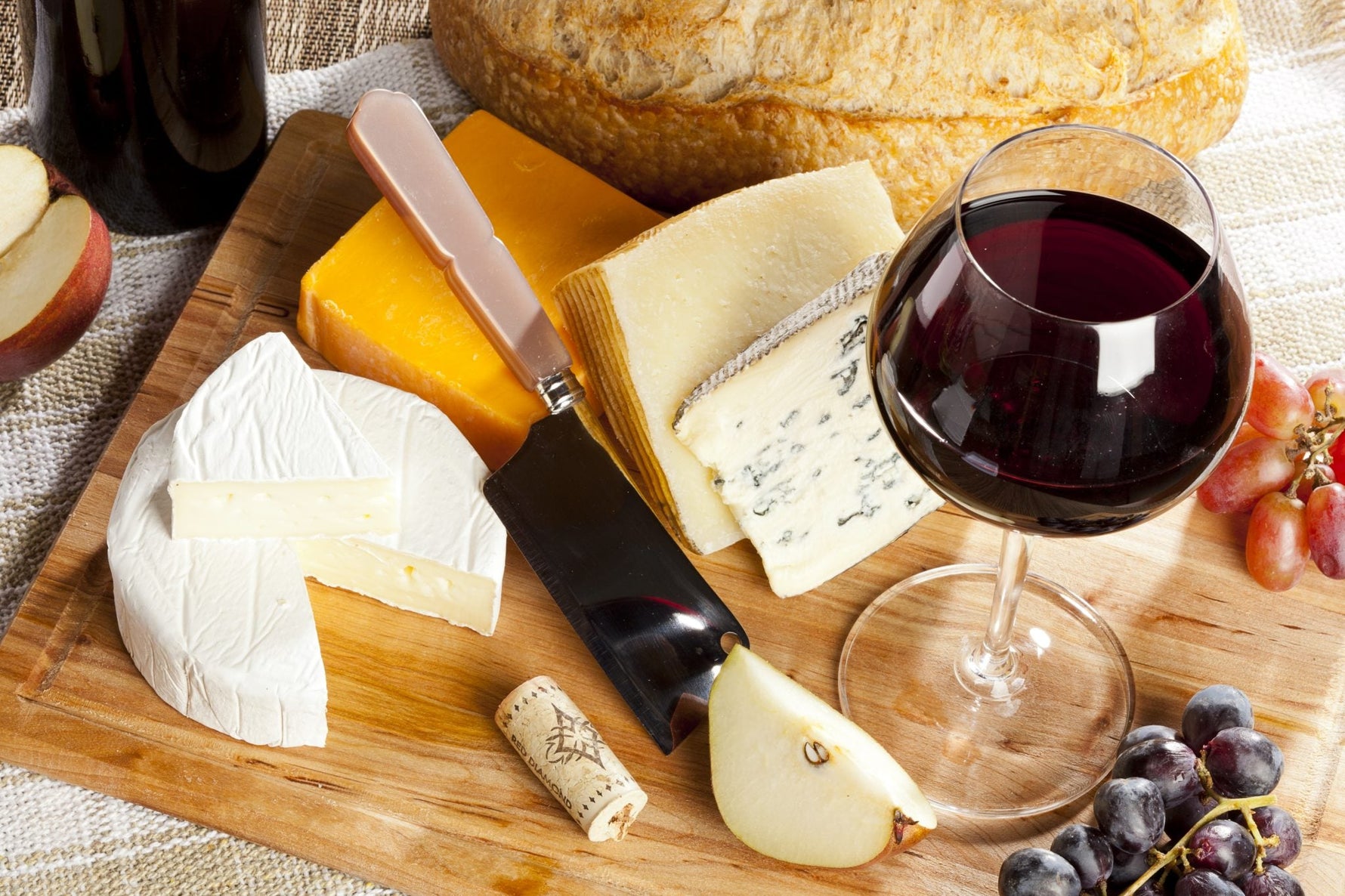
It is no longer a secret that cheese and wine go perfectly together and that, paired correctly, they enrich each other's flavors. In fact, serving a cheese platter alongside a few glasses of wine has become a habit for gourmets.
However, with current options becoming increasingly numerous for both cheeses and wines, the decisions on how to pair them can be overwhelming. That is why we have researched and created an easy-to-understand guide to provide you with a starting point for pairing your favorite cheeses with different types of wine. Read it below!
Brie Cheese
Torockoi Brie Cheese
Brie cheese is a creamy, soft, and aromatic cheese of French origin. It has a white, slightly glossy color, and on the outside, it is covered with a layer of white, edible mold (which can be consumed). The cheese's aging period is approximately 45 days, and when ready for consumption, it has a slightly spicy aroma.
Brie cheese needs a wine that pairs well with its distinct flavors, but at the same time is subtle enough not to overpower them. Suitable varieties for this type of creamy cheese are:
Cabernet Franc
Pinot Noir
Pinot Blanc
Chardonnay
Merlot
Sauvignon Blanc
Riesling
Parmesan Cheese
Parmesan is an Italian cheese with a hard and slightly crumbly texture. It has a yellowish color and is covered with a yellowish-white rind. Parmesan is usually made from cow's milk and can have an aging period of between 1 and 4 years. The taste of this cheese differs depending on its aging period; the "older" it is, the spicier and more crumbly it becomes.
Regarding pairing Parmesan with wines, the perfect blend of flavors is with tannic varieties, which very effectively soften the salty and hard taste of this cheese. Suitable wines for this type of hard cheese are:
Chianti
Cabernet Sauvignon
Chardonnay
Merlot
Sangiovese
Sauvignon Blanc
Shiraz/Syrah
Cheddar Cheese
Cheddar is an aged cheese of English origin. It has a yellow color, a dense and hard texture, and a slightly bitter and sharp taste. Cheddar cheese is usually made from cow's milk and has an aging period of up to 18 months, and the older it is, the more intense its taste becomes.
Cheddar cheese needs a tannic wine to soften its intensity a little, giving it a more "mellow" flavor. Suitable varieties for this type of cheese are:
Malbec
Cabernet Franc
Cabernet Sauvignon
Merlot
Pinot Gris
Rioja
Sauvignon Blanc
Shiraz/Syrah
Feta and Telemea Cheese
Feta is a soft cheese of Greek origin that is preserved, just like Romanian Telemea, in brine. Both Feta and Telemea have a white color, a salty and acidic taste, and a dense, creamy, and crumbly texture.
The soft and creamy consistency and the salty taste of Feta and Telemea cheeses go very well with a balanced and light wine. Suitable varieties for these types of salty cheese are:
Pinot Noir
Pinot Blanc
Sauvignon Blanc
Beaujolais
Zinfandel
Torockoi cheeses alongside red wine
Blue Cheese
Blue cheese is an aged cheese with a hard texture and a harsh, intense taste—sometimes salty, sometimes slightly sharp—and a strong smell. It can be made from cow, goat, or sheep milk and contains Penicillium cultures. It is aged in temperature-controlled spaces (usually low), such as caves.
Blue cheese needs an aromatic and dense wine that offers a perfect "foil" to soften its intense flavor. Suitable wines for this type of hard cheese are:
Cabernet Sauvignon
Port
Dessert Wine
Riesling
Sangiovese
Zinfandel
A cheese platter, along with a few glasses of wine, is a great choice whether you are planning an event, a tasting, or simply want a relaxing evening for two or with friends. Keep our recommendations in mind and enjoy the flavors of these two foods just as you deserve.
Showing 15/20
